

Security Awareness Training
Train the team, reduce human risk, and build measurable security habits that support compliance.
Cocoon CS Security Awareness Training gives employees practical, engaging guidance on how to identify and avoid common attack techniques such as phishing, password misuse, unsafe data handling, and social engineering.
The program is structured to fit real workdays, provide evidence of participation, and help organizations create a culture where secure behavior is part of daily operations instead of a once-a-year checkbox.
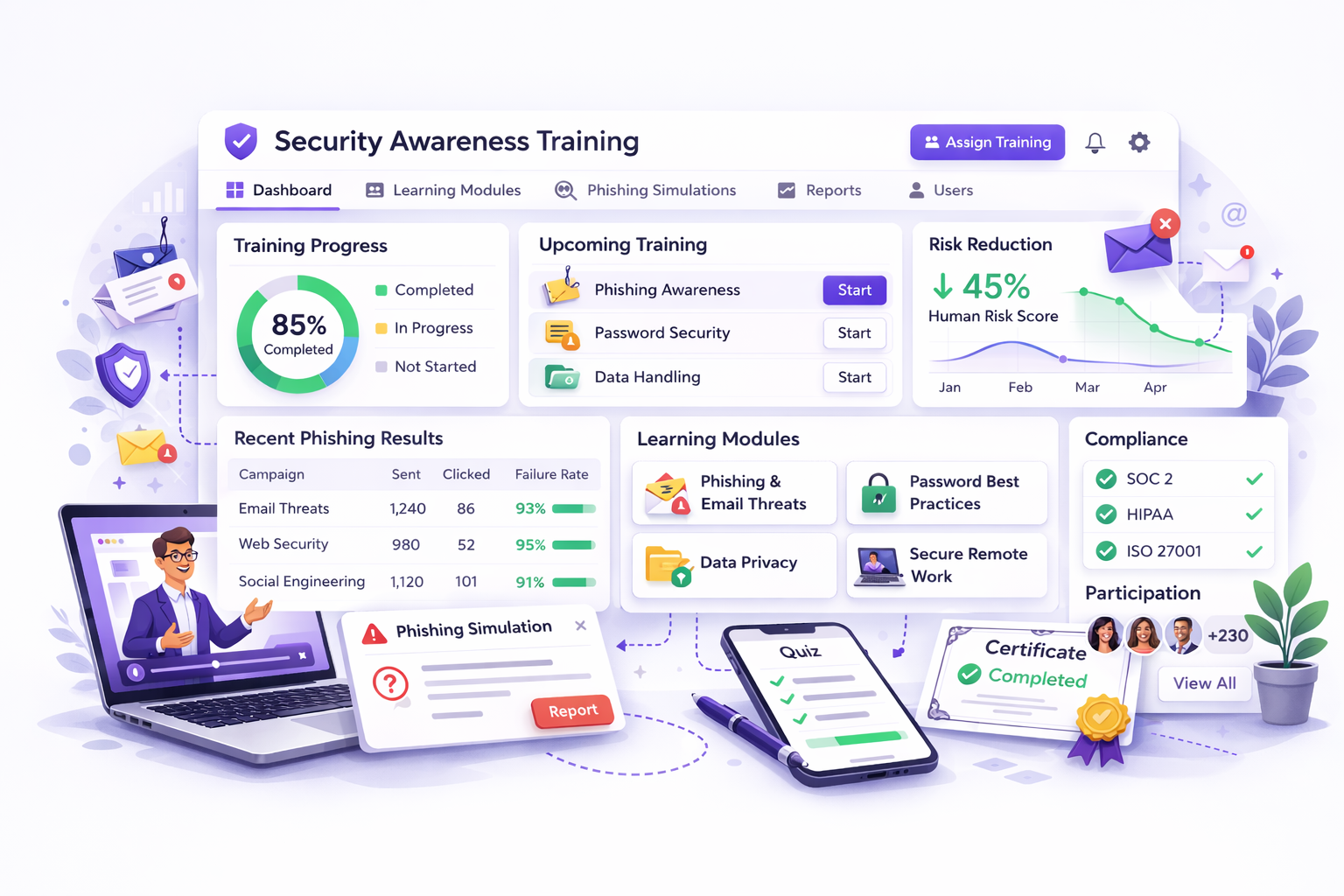

The training model is designed to be practical, measurable, and easy to sustain across departments.
Why organizations invest in awareness training

Reduce Human Error
Help users recognize the attacks and bad habits that commonly open the door to compromise.

Support Audit Readiness
Provide evidence of recurring education and program participation for buyers, auditors, and insurers.

Build Lasting Habits
Reinforce secure choices through repeated learning moments instead of relying on a single annual session.
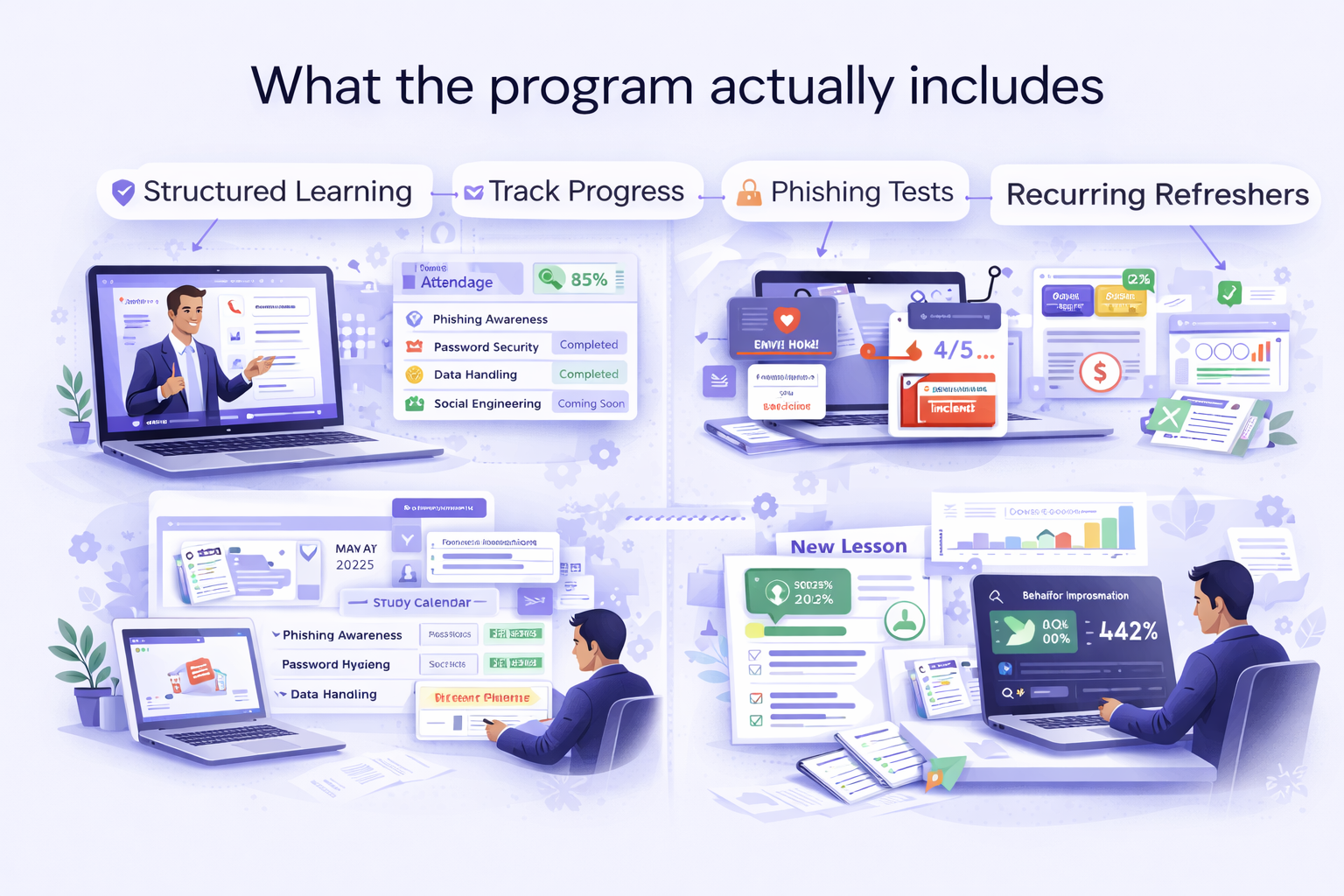
What the program actually includes
Security awareness training teaches people how to spot threats and respond correctly before small mistakes turn into incidents. It is one of the most direct ways to strengthen the human layer of defense.
- Structured learning on phishing, password hygiene, data handling, social engineering, and everyday security decisions.
- Short, repeatable content that fits operational schedules instead of requiring large time blocks.
- Tracking and reporting that show completion status, participation trends, and where additional coaching may be needed.
- Optional phishing simulations and recurring refreshers to reinforce lessons and measure behavior change over time.
Program components that make training stick
The service combines learning content, reporting, and optional phishing simulations so the program remains measurable and operationally relevant.
Interactive Online Courses
Deliver practical lessons on phishing, passwords, safe browsing, and real-world attack techniques.

Progress and Risk Reporting
Track completion, highlight at-risk groups, and give leadership a clearer view of participation trends.

Certificates and Recurring Training
Maintain evidence of completion while keeping knowledge current through regular refreshers.

Optional Phishing Simulations
Extend the program with safe phishing exercises that test retention and support targeted coaching.

Business outcomes beyond basic compliance
The strongest programs do more than satisfy an audit requirement. They reduce preventable incidents, reinforce accountability, and improve response behavior across the organization.
- Reduce breach risk by lowering the chance of clicks, unsafe sharing, and avoidable credential exposure.
- Support compliance expectations tied to security training across frameworks, insurers, and customer diligence programs.
- Improve staff accountability by making secure behavior a visible and repeatable business expectation.
- Strengthen incident reporting habits so suspicious activity is recognized and escalated earlier.
- Provide leadership with measurable proof that security culture is being maintained, not assumed.
- Support cyber-insurance conversations with evidence of recurring end-user education.
The training model is designed to be practical, measurable, and easy to sustain across departments.
Connect this solution to the rest of your program
Use the platform, framework guidance, and industry context together so solution work supports a broader compliance operating model.