

Phishing Email Campaign
Measure how people respond to realistic email lures, then use the results to guide focused coaching.
Cocoon CS Phishing Email Campaigns use controlled, authorized simulations so you can observe how people respond to realistic lures.
Each campaign turns clicks, submissions, and reporting behavior into coaching priorities and trend data that show where observed behavior is changing and where more support may be needed.
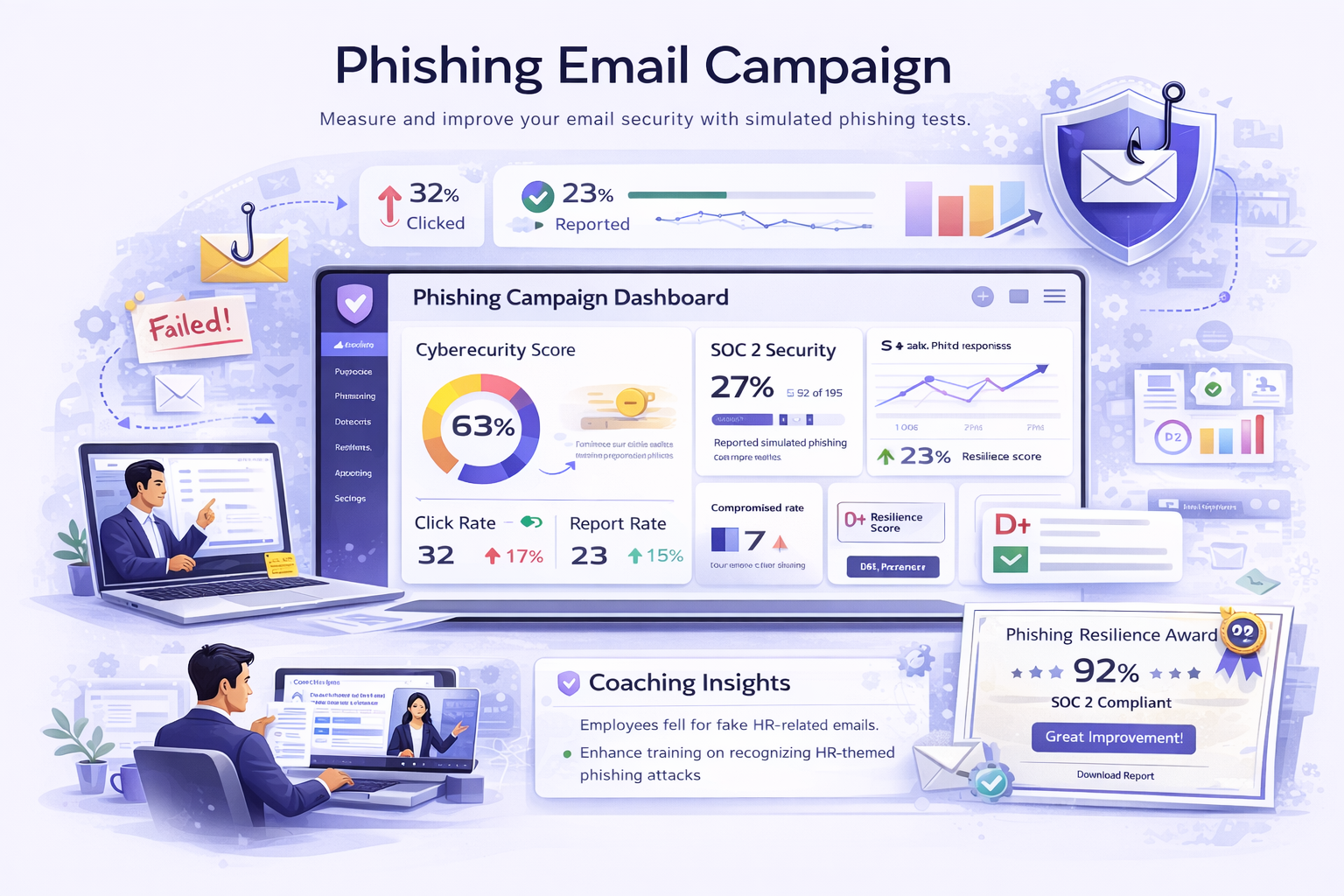

Each campaign produces observed response metrics and targeted follow-up priorities.
Why organizations run phishing simulations

Baseline Risk Clearly
See how departments, roles, and individuals respond to realistic phishing attempts in a controlled environment.

Coach with Precision
Direct follow-up training toward the users and scenarios that reveal the highest practical risk.

Track Change
Compare observed behavior across repeated campaigns and report the trend in terms leadership can use.
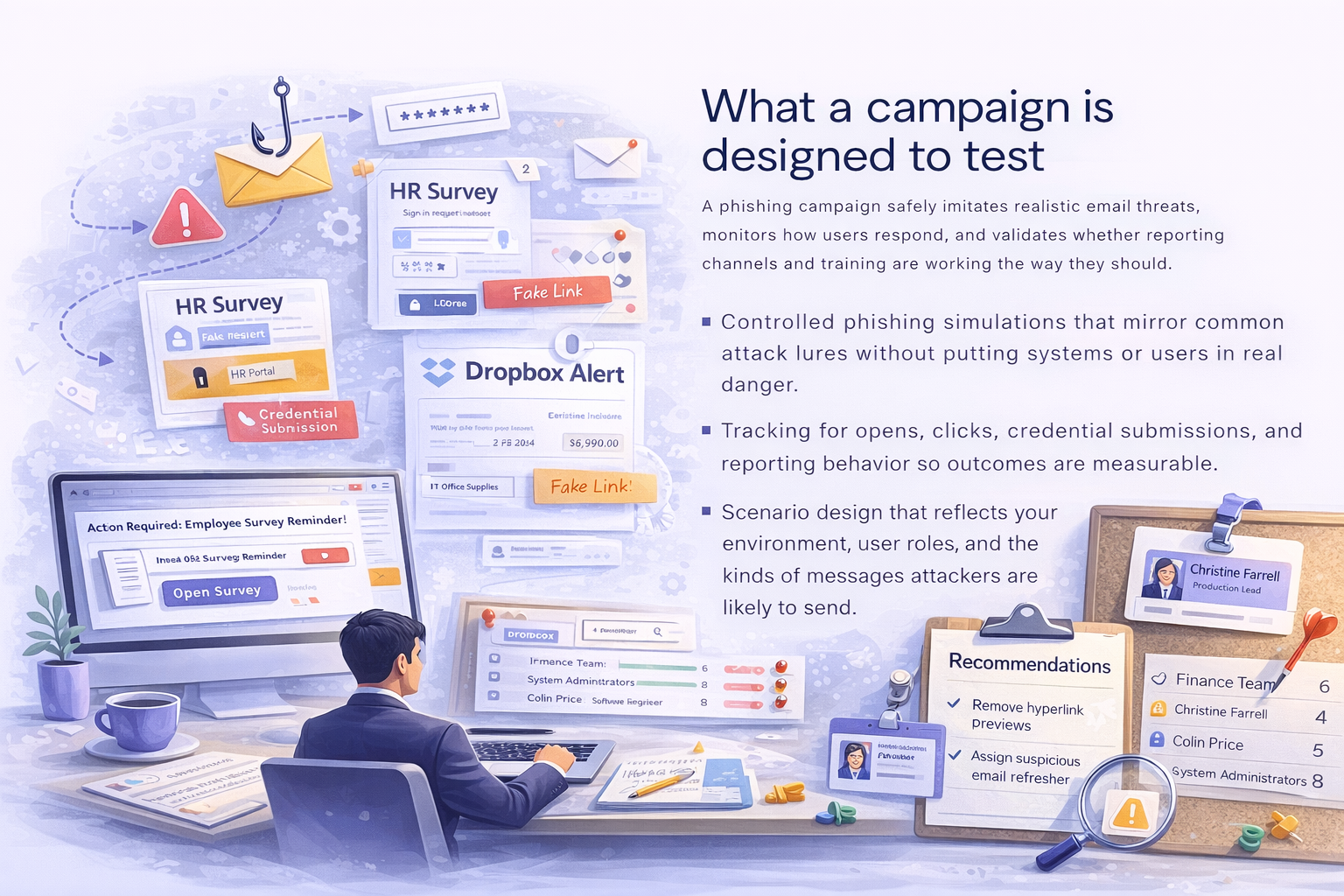
What a campaign is designed to test
A controlled phishing campaign imitates realistic email threats, observes how users respond, and checks whether reporting channels and training are being used as intended.
- Controlled phishing simulations that mirror common attack lures within an agreed, authorized scope.
- Tracking for opens, clicks, credential submissions, and reporting behavior so outcomes are measurable.
- Scenario design that reflects your environment, user roles, and the kinds of messages attackers are likely to send.
- Targeted follow-up recommendations to reinforce learning and improve the next campaign cycle.
Campaign scenarios and engagement options
Campaigns can be tailored by role, department, or business workflow so the exercise reflects how attackers would actually target your organization.
Credential-Harvest Scenarios
Test whether users recognize and avoid fake sign-in pages and credential prompts.

Link, Attachment, and QR Lures
Simulate common delivery methods used to trigger unsafe clicks and risky user behavior.

BEC and Role-Based Campaigns
Mimic business email compromise tactics and tailor scenarios for finance, executives, and other high-value roles.

Reporting Workflow Checks
Validate whether employees know how to report suspicious email and whether escalation paths actually work.

Clear metrics with practical follow-up
The value comes from more than click rates. Cocoon CS uses campaign results to direct coaching, reinforce habits, and support measurable improvement.
- Baseline human risk by showing how different teams react to realistic phishing scenarios.
- Focus coaching on the users, roles, or departments that need the most support.
- Reinforce behavior change at scale through repeatable simulations and follow-up learning.
- Provide leadership with clear metrics they can use in risk reviews and board conversations.
- Support compliance and customer diligence with evidence of active security-awareness testing.
- Validate whether reporting workflows are visible and effective when suspicious email appears.
Each campaign produces observed response metrics and targeted follow-up priorities.
Connect this solution to the rest of your program
Use the platform, framework guidance, and industry context together so solution work supports a broader compliance operating model.