

Penetration Testing
Find vulnerabilities before attackers do with expert-led attack simulations built around your real environment.
Cocoon CS Penetration Testing combines experienced offensive security practitioners, structured attack paths, and clear reporting so you can validate whether weaknesses are actually exploitable.
The result is a focused engagement that helps technical teams remediate faster, gives leadership a defensible view of risk, and supports buyers, auditors, and insurers who expect evidence of security testing.
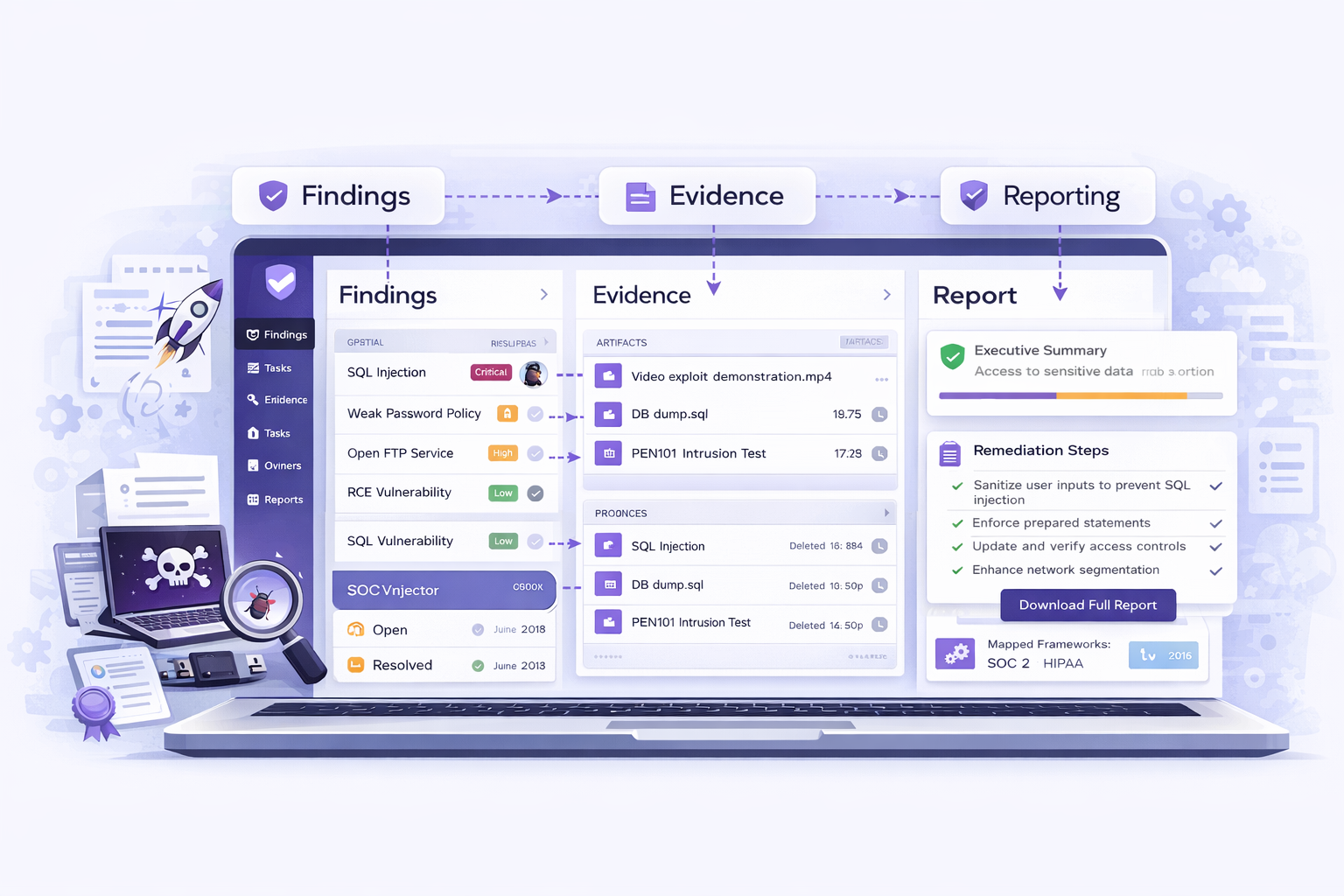

Every assessment is structured to give executives the signal they need and engineers the detail they need.
Why organizations use penetration testing

Validate Real Exposure
Confirm whether weaknesses can actually be chained or exploited instead of relying on theoretical severity alone.

Prioritize What Matters
Focus teams on the systems, applications, and attack paths that create the most meaningful business risk.

Accelerate Remediation
Give engineering and operations teams concise findings, proof points, and fix guidance they can use immediately.
What the engagement actually covers
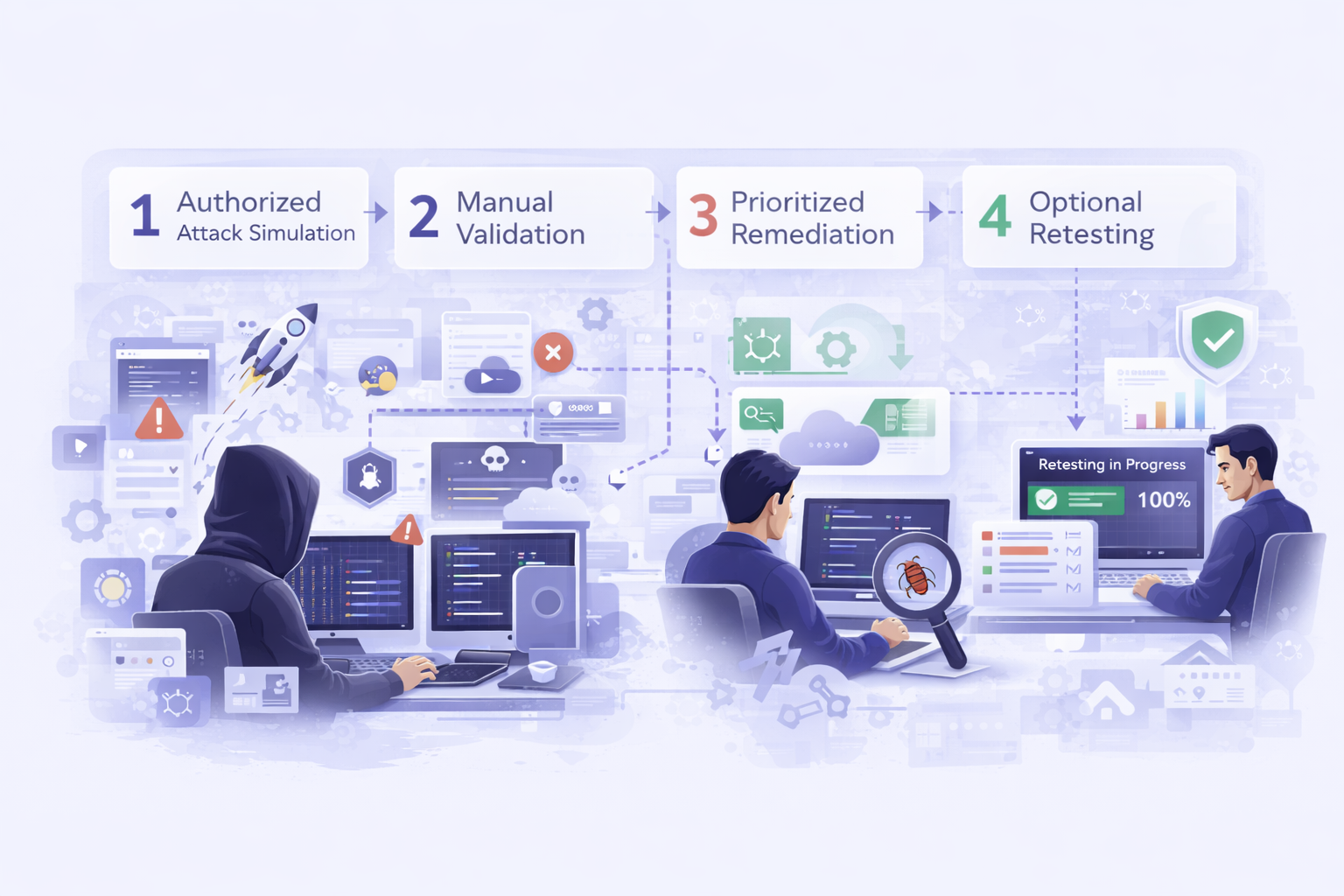
Penetration testing goes beyond vulnerability discovery. Cocoon CS simulates realistic attacker behavior, proves where exposure is real, and documents the steps required to close the gap.
- Authorized testing against the systems, applications, or environments that matter most to your threat profile.
- Manual validation of findings so you know which issues are exploitable and which ones are only theoretical.
- Prioritized remediation guidance tied to business impact, affected assets, and realistic attacker behavior.
- Optional retesting after fixes so the final result reflects verified improvement rather than assumptions.
Testing coverage aligned to modern attack paths
Each engagement is scoped to your systems, users, and business priorities so the output is practical, not generic.
External Network Testing
Assess internet-facing assets, exposed services, and perimeter controls from an attacker perspective.

Internal and Lateral Movement
Test segmentation, trust boundaries, and escalation opportunities after an initial foothold.

Web and API Security
Evaluate business logic, authentication, authorization, and input handling across applications and APIs.

Cloud and Hybrid Environments
Review externally exposed cloud services, connected workloads, and hybrid configurations that expand attack surface.

Outcomes leaders and technical teams can act on
The engagement is designed to produce immediate remediation value while strengthening governance and compliance narratives.
- Reduce breach likelihood by surfacing exploitable weaknesses early.
- Prioritize remediation work around actual business risk, not just scanner output.
- Support frameworks such as SOC 2, PCI DSS, ISO 27001, and customer due diligence.
- Improve change management by testing critical systems before attackers do.
- Translate technical exposure into language leadership can use for decisions and reporting.
- Create a repeatable security-testing rhythm across new releases, infrastructure, and cloud services.
Every assessment is structured to give executives the signal they need and engineers the detail they need.
Connect this solution to the rest of your program
Use the platform, framework guidance, and industry context together so solution work supports a broader compliance operating model.